
Neurogender: Difference between revisions
(added content) |
(Fixing lots of broken citations with dead links) Tag: 2017 source edit |
||
| (96 intermediate revisions by 29 users not shown) | |||
| Line 1: | Line 1: | ||
{{ | <!-- | ||
Sekhet's note on progress in this document: | |||
Reorganizing entries into sections by neurotype. | |||
Removing entries that cited no source, and/or were absent from the Gender Census. | |||
-->{{featured article}} | |||
{{infobox identity | {{infobox identity | ||
| flag = neurogender.png | | flag = neurogender.png | ||
| meaning = The colored bars are to represent the spectrum of different neurotypes and gender identities that neurodivergent individuals have. The infinity symbol is to represent neurodiversity. | | meaning = The colored bars are to represent the spectrum of different neurotypes and gender identities that neurodivergent individuals have. The infinity symbol is to represent neurodiversity. | ||
| | | umbrella = [[Nonbinary]] | ||
| | | frequency = 0.2% | ||
}} | }} | ||
'''Neurogender''' | '''Neurogender''' (coined by Tumblr user Baaphomett in 2014, in a submission to the [[MOGAI-archive blog]])<ref name="baaphomett masterpost">Baaphomett. "Masterpost of genders coined by Baaphomett." ''Mogai-Archive.'' Original post where these were coined, which is lost: http://mogai-archive.tumblr.com/post/91736136744/masterpost-of-genders-coined-by-baaphomett Archive of that post: https://purrloinsucks.tumblr.com/post/95720973644/masterpost-of-genders-coined-by-baaphomett Archive of that archive: https://archive.is/yULU0#selection-169.2-169.93</ref> means any self-identity in which a person feels that their gender identity is somehow linked to-- and best described in connection with-- their neurological type (neurotype), neurological conditions, neurodivergence, mental variation, or mental illness. One's neurotype affects many parts of one's life, including one's gender identity. Neurogenders are not defined in relationship to concepts of male and female, which puts it under the umbrellas of [[nonbinary]] gender and [[xenogender]]. There are many different neurogenders related to most, if not all, neurodivergencies. Not everyone who is neurodivergent sees themselves as having a neurogender. Some neurogenders are only for people with certain neurotypes. | ||
"Neurodivergent" is a general category for people whose neurological development and state are atypical, and it includes people who have attention deficit hyperactivity disorder (ADHD), autism, dyslexia, epilepsy, obsessive-compulsive disorder (OCD), or many other neurological conditions or mental illnesses. The word neurodivergent comes from the neurodiversity movement, which was started by autistic rights activists in the late 1990s. The neurodiversity movement seeks civil rights for neurodivergent people, and encourages seeing neurodivergence as a natural part of human diversity.<ref name="disabled world">"What Is: Neurodiversity, Neurodivergent, Neurotypical." ''Disabled World.'' Updated April 7, 2020. https://www.disabled-world.com/disability/awareness/neurodiversity/ [unknown-error Archived] on 17 July 2023</ref> | |||
In her book ''The Gender Creative Child'', psychologist Diane Ehrensaft wrote: | |||
{{quote|...when a child shows up with a co-occurrence of [[gender nonconformity]] and neuro-atypicality, we are meeting with gender ''and'' something else rather than gender as a symptom of something else. It might even be that the gender and the neurodiversity are part and parcel of the same thing.<ref>{{cite book|title=The Gender Creative Child|page=106|last=Ehrensaft|first=Diane|year=2016}}</ref>}} | |||
In order to keep the wiki accurate to the lived experiences of neurodiverse and nonbinary people, identities should only be listed here if they cite from at least two separate external sources, showing: | |||
' | 1. origin (such as a source about how the term was coined, or at least history of the term's use), and | ||
2. evidence that the identity has actually been used as someone's own identity. Acceptable evidence includes presence in at least one Gender Census result, a news article, or published nonfiction book describing an actual person using it. | |||
' | |||
A design for a pride flag does not count toward origin or evidence of use. A personal blog written by the person who coined the term or claiming to use the term does not count toward evidence of use. A source citation of a web page counts if it is either a live link, or an archive of a dead link, but dead links by themselves are not acceptable. | |||
==Neurogenders associated with autism== | |||
{{ | Autism ("Autism Spectrum Disorder" in the DSM-V<ref>American Psychiatric Association. (2022). ''Diagnostic and statistical manual of mental disorders'' (5th ed., text rev.). <nowiki>https://doi.org/10.1176/appi.books.9780890425787</nowiki></ref>) is a spectrum of highly variable neurodevelopmental disorders. Psychologists have three main criteria for autism: impairments in social interaction, impairments in communication, and repetitive behavior.<ref name=DSM5>{{cite book | title = Diagnostic and Statistical Manual of Mental Disorders, Fifth Edition | chapter = Autism Spectrum Disorder, 299.00 (F84.0) | editor = American Psychiatric Association | year = 2013 | publisher = American Psychiatric Publishing | pagex = 50–59}}</ref><ref name="Filipek">{{cite journal | vauthors = Filipek PA, Accardo PJ, Baranek GT, Cook EH, Dawson G, Gordon B, Gravel JS, Johnson CP, Kallen RJ, Levy SE, Minshew NJ, Ozonoff S, Prizant BM, Rapin I, Rogers SJ, Stone WL, Teplin S, Tuchman RF, Volkmar FR | s2cid = 145113684 | title = The screening and diagnosis of autistic spectrum disorders | journal = J Autism Dev Disord | volume = 29 | issue = 6 | pages = 439–484 | year = 1999 | pmid = 10638459 | doi = 10.1023/A:1021943802493 }} This paper represents a consensus of representatives from nine professional and four parent organizations in the US.</ref><ref name="Geschwind-2009">{{cite journal | last = Geschwind | first = Daniel H | title = Advances in autism | journal = Annu Rev Med | volume = 60 | pages = 367–380 | year = 2009 | pmid = 19630577 | pmc = 3645857 | doi = 10.1146/annurev.med.60.053107.121225}}</ref> Autistic people may be impaired in some respects, but average or better in others.<ref>{{cite book |vauthors=Pinel JP |title=Biopsychology |year=2011 |publisher=Pearson |location=Boston, Massachusetts |edition=8th |isbn=978-0-205-03099-6 |oclc=1085798897 |page=235 }}</ref> Autism lasts lifelong from birth; behavioral signs can be apparent as early as infancy,<ref>{{cite journal | vauthors = Rogers SJ | title = What are infant siblings teaching us about autism in infancy? | journal = Autism Res | volume = 2 | issue = 3 | pages = 125–137 | year = 2009 | pmid = 19582867 | pmc = 2791538 | doi = 10.1002/aur.81}}</ref> and many adults and seniors are autistic.<ref name=Ste106>{{cite journal | vauthors = Steinhausen HC, Mohr Jensen C, Lauritsen MB | title = A systematic review and meta-analysis of the long-term overall outcome of autism spectrum disorders in adolescence and adulthood | journal = Acta Psychiatrica Scandinavica | volume = 133 | issue = 6 | pages = 445–452 | date = June 2016 | pmid = 26763353 | doi = 10.1111/acps.12559 }}</ref><ref name="Rapin">{{cite journal | vauthors = Rapin I, Tuchman RF | title = Autism: definition, neurobiology, screening, diagnosis | journal = Pediatric Clinics of North America | volume = 55 | issue = 5 | pages = 1129–1146, viii | date = October 2008 | pmid = 18929056 | doi = 10.1016/j.pcl.2008.07.005 }}</ref> The specific causes of autism are unknown, though there is thought to be a substantial genetic contribution).<ref name="Fractionable">{{cite journal|vauthors=Happé F, Ronald A |s2cid=13928876 |title=The 'fractionable autism triad': a review of evidence from behavioural, genetic, cognitive and neural research |journal=Neuropsychol Rev |volume=18 |issue=4 |pages=287–304 |year=2008 |pmid=18956240 |doi=10.1007/s11065-008-9076-8}}</ref><ref name="HappeTime">{{cite journal | vauthors = Happé F, Ronald A, Plomin R | title = Time to give up on a single explanation for autism | journal = Nature Neuroscience | volume = 9 | issue = 10 | pages = 1218–1220 | year = 2006 | pmid = 17001340 | doi = 10.1038/nn1770 | doi-access = free}}</ref> Therapeutic goals are not to "cure" autistic neurotypes but to teach functional skills, reduce harmful behaviors, and enhance well-being.<ref name="CCD2007">{{cite journal | vauthors = Myers SM, Johnson CP | title = Management of children with autism spectrum disorders | journal = Pediatrics | volume = 120 | issue = 5 | pages = 1162–1182 | date = November 2007 | pmid = 17967921 | doi = 10.1542/peds.2007-2362 | url = https://pediatrics.aappublications.org/content/120/5/1162 | doi-access = free }}</ref> The autistic culture and autism rights movement includes those who argue that autism should be accepted as a natural part of the diversity of kinds of people.<ref name=Sil2008>{{cite journal |journal=BioSocieties |year=2008 |volume=3 |issue=3 |pages=325–341 |title=Fieldwork on another planet: social science perspectives on the autism spectrum | vauthors = Silverman C |s2cid=145379758 |doi=10.1017/S1745855208006236}}</ref><ref name=Frith2014>{{cite news |last=Frith |first=Uta | name-list-format = vanc |title=Autism – are we any closer to explaining the enigma? |url=https://thepsychologist.bps.org.uk/volume-27/edition-10/autism-are-we-any-closer-explaining-enigma |work=The Psychologist (magazine) |publisher=British Psychological Society |date=October 2014 |volume=27 |pages=744–745|archive-url=https://web.archive.org/web/20230315141155/https://thepsychologist.bps.org.uk/volume-27/edition-10/autism-are-we-any-closer-explaining-enigma |archive-date=17 July 2023 }}</ref> In the 2000s, the number of autistic people was estimated at 1–2 per 1,000 people worldwide.<ref name=News2007>{{cite journal | vauthors = Newschaffer CJ, Croen LA, Daniels J, Giarelli E, Grether JK, Levy SE, Mandell DS, Miller LA, Pinto-Martin J, Reaven J, Reynolds AM, Rice CE, Schendel D, Windham GC | title = The epidemiology of autism spectrum disorders | journal = Annual Review of Public Health | volume = 28 | pages = 235–258 | year = 2007 | pmid = 17367287 | doi = 10.1146/annurev.publhealth.28.021406.144007 }}</ref> Recent U.S. estimates suggest that approximately 1 in every 36 children is on the autism spectrum (Maenner et al., 2023)<ref>Maenner, M.J., Warren, Z., Williams, A.R., et al. (2023). Prevalence and Characteristics of Autism Spectrum Disorder Among Children Aged 8 Years — Autism and Developmental Disabilities Monitoring Network, 11 Sites, United States, 2020. MMWR Surveill Summ; 72(No. SS-2):1–14. DOI: <nowiki>http://dx.doi.org/10.15585/mmwr.ss7202a1</nowiki></ref>, and roughly 1 in every 45 adults is on the autism spectrum (Dietz et al., 2020)<ref>Dietz, P. M., Rose, C. E., McArthur, D., & Maenner, M. (2020). National and State Estimates of Adults with Autism Spectrum Disorder. Journal of autism and developmental disorders, 50(12), 4258–4266. DOI: <nowiki>https://doi.org/10.1007/s10803-020-04494-4</nowiki></ref>. | ||
=== | |||
{{Clear}} | {{Clear}} | ||
===Autigender=== | |||
[[File:autigender.png|thumb|Autigender [[Flags|flag]] created by noitspronouncedgif.<ref>http://pride-flags-for-us.tumblr.com/post/123783742554/fascigender-and-autigender-flags-from-the-pride [https://web.archive.org/web/20230315141155/https://pride-flags-for-us.tumblr.com/post/123783742554/fascigender-and-autigender-flags-from-the-pride Archived] on 17 July 2023</ref> The black infinity symbol refers to the rainbow infinity symbol that means neurodiversity.]] | |||
* '''Name(s):''' autismgender, autigender, or autgender.<ref name="autismgender mogai-archive">The since-deleted post in the ''mogai-archive'' blog where this word was coined: http://mogai-archive.tumblr.com/post/93477063574/auti-s-gender Another blog's archive of that lost blog post: http://purrloinsucks.tumblr.com/post/95723823254/autisgender An archive of that archive: https://archive.is/BTFMN#selection-489.0-489.14</ref> | |||
''' | * '''Origin:''' Coined on or before Aug 25, 2014 by Tumblr users autismgender and esperancegirl by submissions to the MOGAI-Archive blog.<ref name="autismgender mogai-archive" /> | ||
* '''Meaning:''' A gender identity with which some nonbinary autistic people choose to use to describe themselves. As originally defined by Tumblr users autismgender and esperancegirl, autismgender means "autism as part or whole of gender identity; a gender that can only be understood in context of being autistic." When your gender experience is influenced by or linked to your autism, or your understanding of the concept of gender itself is fundamentally altered by your autism.<ref name="autismgender mogai-archive" /> | |||
</ | |||
* '''Keywords:''' autism, gender connected with mind or brain conditions ([[neurogender]]), genders about things other than connection to female or male, | |||
''' | |||
{{ | * '''Demographics:''' In the 2016 Nonbinary/Genderqueer Survey, one of the respondents called their gender identity "autistic," and another said "autisgender."{{Gender Census|2016}} In the 2019 Worldwide Gender Census, 66 of the respondents (0.59%) called their gender identity autigender, autgender, autistic, or autiqueer. Several of these included explanations from the survey respondents that they meant that autism was their gender, or had a significant effect on their understanding of gender.{{Gender Census|2019}} In the 2020 Gender Census, 82 people were autigender, five people were autgender, one person reported they were "autigender maybe", two reported "autism gender"/"autismgender", one person was "autiegender", and one person was "autigender male" (total of 92 people whose gender is affected by their autism).<ref name="GC2020">[https://docs.google.com/spreadsheets/d/1j7mwkZVtQYHxNlgS2J8onVCpVz-l1aJbBzG7msN5rxs/edit#gid=260963482 GC2020 Public Copy], 1 November 2020 [https://web.archive.org/web/20230603184501/https://docs.google.com/spreadsheets/d/1j7mwkZVtQYHxNlgS2J8onVCpVz-l1aJbBzG7msN5rxs/edit Archived] on 17 July 2023</ref> | ||
= | |||
[ | |||
[ | |||
{{Pride flags|category=Autigender pride flags}} | |||
==Neurogenders associated with Borderline Personality Disorder== | |||
== | |||
Borderline personality disorder (BPD)<ref name="NICEGuidelines2009">{{cite book|url=https://www.ncbi.nlm.nih.gov/books/NBK55415/|title=Borderline personality disorder NICE Clinical Guidelines, No. 78|date=2009|publisher=British Psychological Society|archive-url=https://web.archive.org/web/20230629215157/https://www.ncbi.nlm.nih.gov/books/NBK55415/|archive-date=17 July 2023}}</ref> is a mental illness characterized by a long-term pattern of unstable relationships, distorted sense of self, and strong emotional reactions.<ref name=NIH2016>{{Cite web|url=http://www.nimh.nih.gov/health/topics/borderline-personality-disorder/index.shtml|title=Borderline Personality Disorder|website=NIMH|access-date=16 March 2016|url-status=live|archive-url=https://web.archive.org/web/20160322130612/http://www.nimh.nih.gov/health/topics/borderline-personality-disorder/index.shtml|archive-date=22 March 2016}}</ref><ref name=DSM5 /> People with BPD tend to have trouble seeing their identity clearly. In particular, they tend to have difficulty knowing what they value, believe, prefer, and enjoy.<ref name=Manning_23>{{cite book|title=Loving Someone with Borderline Personality Disorder|last=Manning|first=Shari| name-list-format = vanc |publisher=The Guilford Press|year=2011|isbn=978-1-59385-607-6|ref=harv}} Page 23.</ref> They may also tend to dissociate, which can be thought of as an intense form of "zoning out".<ref name=Manning_24>{{cite book|title=Loving Someone with Borderline Personality Disorder|last=Manning|first=Shari| name-list-format = vanc |publisher=The Guilford Press|year=2011|isbn=978-1-59385-607-6|ref=harv}} Page 24.</ref> They are often unsure about their long-term goals for relationships and jobs. This can cause people with BPD to feel "empty" and "lost".<ref name=Manning_23/> Individuals often engage in self-harm, substance abuse, depression, eating disorders, and other dangerous behavior.<ref name=NIH2016/> Approximately 10% of people affected die by suicide.<ref name=NIH2016/><ref name=DSM5 /> The behavior typically begins by early adulthood and occurs across a variety of situations.<ref name=DSM5 /> BPD is typically treated with therapy, which may reduce the risk of suicide.<ref name=NIH2016/> Medications do not cure BPD, but can help with the symptoms.<ref name=NIH2016/> About 1.6% of people have BPD in a given year, with some estimates as high as 6%.<ref name=NIH2016/><ref name=DSM5/> | |||
===Bordergender=== | |||
=== | |||
{{ | * '''Name(s):''' bordergender or borderfluid<ref name="bordergender">{{cite web|title=Bordergender/Borderfluid|work=borderline blog|date=17 January 2015|url=http://imighthavebpd.tumblr.com/post/108384556779/bordergenderborderfluid|archive-date=21 September 2016|archive-url=https://web.archive.org/web/20160921031543/http://imighthavebpd.tumblr.com/post/108384556779/bordergenderborderfluid}}</ref> | ||
</ | |||
* '''Origin:''' Coined by Tumblr user izayaorihahaha in 2014 in a submission to the MOGAI-Archive blog<ref name="bordergender" /> | |||
''' | |||
* '''Meaning:''' As defined by its coiner, "A fluctuating gender experienced exclusively by people with BPD [Borderline Personality Disorder]. A gender identity lacking a firm grasp on ones identity, while still experiencing gender, to varying degrees, but having trouble pinning it down to just one label or identity. Having the sense of grasping at labels as much as possible to describe a gender we keep questioning because we keep second guessing our sense of selves and, consequentially, our sense of gender. [...] this isn’t 'borderline is my gender' this is 'borderline has an affect on my gender because mental illness can have an affect on all aspects of our lives including our sexualities, romantic orientations and genders.'"<ref name="bordergender" /> | |||
''' | |||
* '''Keywords:''' connected with mind or brain conditions ([[neurogender]]), genders about things other than connection to female or male, indescribable | |||
''' | |||
* '''Demographics:''' In the Nonbinary/Genderqueer Survey 2016, one respondent.{{Gender Census|2016}} In the 2019 Worldwide Gender Census, two respondents.{{Gender Census|2019}} In the 2020 Gender Census, eight people were bordergender and/or borderfluid.{{Gender Census|2020}} | |||
''' | |||
==Neurogenders associated with schizophrenia== | |||
Schizophrenia is a mental disorder in which people interpret reality abnormally. Schizophrenia may result in some combination of hallucinations, delusions, and extremely disordered thinking and behavior that impairs daily functioning.<ref name="mayo_Schi">{{Cite web |title=Schizophrenia |author= |work=Mayo Clinic |date=7 January 2020 |access-date=12 November 2020 |url= https://www.mayoclinic.org/diseases-conditions/schizophrenia/symptoms-causes/syc-20354443|archive-url=https://web.archive.org/web/20230619070419/https://www.mayoclinic.org/diseases-conditions/schizophrenia/symptoms-causes/syc-20354443 |archive-date=17 July 2023 }}</ref> | |||
{{Clear}} | {{Clear}} | ||
[[File:Skhizeingender.png|thumb|Skhizeingender [[Flags|flag]] created by psychotic-corvidae.<ref>{{cite web|title=Decided to make a flag for Skhizeingender since it didn’t have one!|date=29 March 2020|url=https://ask-pride-color-schemes.tumblr.com/post/613970605817085952/decided-to-make-a-flag-for-skhizeingender-since-it|archive-url=https://web.archive.org/web/20230315141155/https://ask-pride-color-schemes.tumblr.com/post/613970605817085952/decided-to-make-a-flag-for-skhizeingender-since-it|archive-date=17 July 2023}}</ref>]] | |||
File: | ===Skhizeingender=== | ||
</ | |||
* '''Name(s):''' skhizeingender | |||
''' | |||
* '''Origin:''' Coined in 2014 or earlier by tumblr user psychoticfrodo, via submission to the mogai-archive blog.<ref>{{cite web|archive-url=https://archive.is/gnhm6|date=28 November 2014|title=skhizeingender|url=https://geoffie.tumblr.com/post/103834997925/skhizeingender#notes|archive-date=11 April 2019}}{{Dead link|date=February 2026 |bot=InternetArchiveBot |fix-attempted=yes }}</ref> | |||
''' | |||
* '''Meaning:''' A gender strongly connected to someone's schizophrenia, or gender that is difficult to describe or communicate because of schizophrenia.<ref name="xeno-aligned-Skhizein">{{cite web|url=https://xeno-aligned.tumblr.com/post/183389604356/are-there-any-psychosisschizophrenia-specific|title=Anonymous asks: Are there any psychosis/schizophrenia specific genders/sexualities etc|date=12 March 2019|archive-url=https://web.archive.org/web/20230315141155/https://xeno-aligned.tumblr.com/post/183389604356/are-there-any-psychosisschizophrenia-specific|archive-date=17 July 2023}}</ref> | |||
''' | |||
* '''Keywords:''' schizophrenia, schizoaffective disorder, psychosis, psychoses | |||
''' | |||
* '''Demographics:''' In the 2020 Gender Census, one respondent.{{Gender Census|2020}} | |||
{{ | |||
=== | ==Neurogenders associated with no one specific neurotype== | ||
=== | ===Gendervague=== | ||
[[File: | [[File:Gendervague.png|thumb|Gendervague [[flags]] created by Cryptomegha.<ref name="vague coin">{{cite web|author=Cryptomegha (Gcdzilla, StrangeGloved) |title=ok so the rly cool people at the neurodivergentkin network and myself are introducing a nonbinary gender that can only be used by neurodivergent people !|work=gcdzilla.tumblr.com|date=August 2014|archive-date=3 October 2014|url=http://gcdzilla.tumblr.com/post/91603686632/ok-so-the-rly-cool-people-at-the-neurodivergentkin|archive-url=https://web.archive.org/web/20141003224751/http://gcdzilla.tumblr.com/post/91603686632/ok-so-the-rly-cool-people-at-the-neurodivergentkin}}</ref>]] | ||
[[File:Lydia_Brown_at_Colorado_Trust.jpg|thumb|150px|[[Lydia X. Z. Brown]] speaking at the [https://www.coloradotrust.org/ Colorado Trust] in 2017. Brown is gendervague.]] | |||
* '''Name(s):''' gendervague<ref name="vague coin" /> | |||
''' | |||
* '''Origin:''' Coined in 2014 by Cryptomegha (Tumblr usernames StrangeGloved and Gcdzilla), together with many participants of the neurodivergentkin network.<ref name="vague coin" /> | |||
''' | |||
* '''Meaning:''' As originally described by its coiners, gendervague is "a nonbinary gender that can only be used by neurodivergent people [...] it means that your gender is not definable with words because of one’s status as neurodivergent. the black and gray flag represents brain fog, as well as vagueness."<ref name="vague coin" /> Later, in 2016, autistic activist [[Lydia X. Z. Brown]] (b. 1993) wrote, "I've started referring to myself as gendervague, a term coined within the autistic community to refer to a specifically neurodivergent experience of trans/gender identity. For many of us, gender mostly impacts our lives when projected onto us through other people's assumptions, but holds little intrinsic meaning. Someone who is gendervague cannot separate their gender identity from their neurodivergence – being autistic doesn't ''cause'' my gender identity, but it is inextricably related to how I understand and experience gender. [...] For many (but certainly not all) autistic people, we can’t make heads or tails of either the widespread assumption that everyone fits neatly into categories of men and women or the nonsensical characteristics expected or assumed of womanhood and manhood. Recent research has shown that autistic people are more likely to identify as transgender or [[genderqueer]] than non-autistic people. That’s not surprising to me, because I've met far more trans or genderqueer people in autistic spaces than I have anywhere else."<ref name="Brown">{{Cite web |title=Gendervague: At the Intersection of Autistic and Trans Experiences |last=Brown |first=Lydia X. Z. |work=The Asperger / Autism Network (AANE) |date=22 June 2016 |access-date=9 June 2020 |url= https://www.aane.org/gendervague-intersection-autistic-trans-experiences/|archive-url=https://web.archive.org/web/20230623035102/https://www.aane.org/gendervague-intersection-autistic-trans-experiences/ |archive-date=17 July 2023 }}</ref> Another gendervague person, the author Max Sparrow, wrote that "gendervague helps to create a community where people understand that disability can affect gender presentation as much as or even more than inherent gender identity. Identity labels so often focus on sifting out one aspect of identity, holding it apart and separate from other aspects of our lives. Gendervague is an inherently intersected identity, honoring two different facets of identity equally, simultaneously more exclusive and more inclusive."<ref name="transtistic">{{cite web|last=Sparrow|first=Max|title=What is gendervague?|work=Transtistic: At the Intersection of Transtistic and Autgender (blog)|date=June 17, 2017|access-date=April 11, 2019|url=https://transtistic.wordpress.com/2017/06/17/what-is-gendervague|archive-url=https://web.archive.org/web/20190411000915/https://transtistic.wordpress.com/2017/06/17/what-is-gendervague|archive-date=April 11, 2019}}</ref> | |||
''' | |||
* '''Keywords:''' attention deficit hyperactivity disorder (ADHD), autism, dyslexia, epilepsy, gender connected with mind or brain conditions ([[neurogender]]), genders about things other than connection to female or male, indefinable, indescribable, obsessive-compulsive disorder (OCD) | |||
''' | |||
''' | * '''Demographics:''' In the 2019 Gender Census, 26 respondents (0.23%) called themselves gendervague. Three more respondents simply called their gender "vague." The latter may or may not have meant the same identity as gendervague.{{Gender Census|2019}} | ||
* '''Notable people who call themselves gendervague:''' As mentioned above, activist [[Lydia X. Z. Brown]] and author Max Sparrow are gendervague. (Sparrow describes themself as "gendervague [[epicene]]".<ref name="Sparrow-about">{{Cite web |title=About |author=Sparrow, Max |work=Transtistic |date= |access-date=5 October 2020 |url= https://transtistic.wordpress.com/about/ |quote=Max Sparrow, Neuroqueer author and gendervague epicene |archive-url=https://web.archive.org/web/20230322023125/https://transtistic.wordpress.com/about/ |archive-date=17 July 2023 }}</ref>) | |||
{{Clear}} | {{Clear}} | ||
<gallery> | <gallery> | ||
File:vagueflux.png|Vagueflux: A gender which is in flux, but determining the intensity of one’s gender is difficult due to neurodivergency. | File:vagueflux.png|Vagueflux: A gender which is in flux, but determining the intensity of one’s gender is difficult due to neurodivergency. | ||
| Line 222: | Line 102: | ||
File:vaguegirl.png|Vaguegirl | File:vaguegirl.png|Vaguegirl | ||
File:vagueboy.png|Vagueboy | File:vagueboy.png|Vagueboy | ||
File:Gendervague by possum-butch.png|An alternate gendervague flag, by tumblr user possum-butch. | |||
File:Gendervague redesign.png|Another alternate gendervague flag. | |||
</gallery> | </gallery> | ||
{{Clear}} | {{Clear}} | ||
===Pendogender=== | |||
[[File:Pendogender.png|thumb|Pendogender [[Flags|flag]] created by pastelmemer.<ref>http://pride-flags-for-us.tumblr.com/post/123466666709/is-there-a-pendogender-flag {{dead link}} [https://web.archive.org/web/20230315141156/https://pride-flags-for-us.tumblr.com/post/123466666709/is-there-a-pendogender-flag Archived] on 17 July 2023</ref><ref>https://pride-color-schemes.tumblr.com/post/148289378876/pendogender [https://web.archive.org/web/20230513051754/https://pride-color-schemes.tumblr.com/post/148289378876/pendogender Archived] on 17 July 2023</ref>]] | |||
* '''Name(s):''' pendogender | |||
* '''Origin:''' Coined in 2014 by Tumblr user pastel-memer by submission to the MOGAI-Archive blog.<ref name="pendogender coin">{{cite web|title=Pendogender|date=1 February 2015|url=https://andwouldntyou-lovetoloveher.tumblr.com/post/109790610803/pendogender|archive-url=https://archive.vn/1lVF2|archive-date=12 November 2020}}</ref> | |||
* '''Meaning:''' As originally described by pastel-memer, it means "never being satisfied with your gender or feeling settled no matter how well it fits due to self-doubt, causing one to compulsively search and seek out something that fits even better. Gender perfectionism. The 'gender' part can be replaced by the closest fitting gender at any time, i.e. pendo[[list of uncommon nonbinary identities#juxera|juxera]] or pendo-[[agender]]. For neurodivergent folks only, coined with people with anxiety disorders, OCD, and OCPD in mind."<ref name="pendogender coin" /> | |||
* '''Keywords:''' anxiety, gender connected with mind or brain conditions ([[neurogender]]), genders about things other than connection to female or male, Obsessive Compulsive Disorder (OCD), Obsessive-Compulsive Personality Disorder (OCPD), prefix, [[questioning]] | |||
''' | |||
''' | * '''Demographics:''' In the 2019 Gender Census, one respondent.{{Gender Census|2019}} | ||
{{Clear}} | {{Clear}} | ||
| Line 247: | Line 128: | ||
{{Clear}} | {{Clear}} | ||
==References== | ==References== | ||
{{reflist}} | |||
[[Category:Xenogender]] | |||
Latest revision as of 16:10, 18 May 2026
 Meaning The colored bars are to represent the spectrum of different neurotypes and gender identities that neurodivergent individuals have. The infinity symbol is to represent neurodiversity. | |
| Under the umbrella term | Nonbinary |
|---|---|
| Frequency | 0.2% |
Neurogender (coined by Tumblr user Baaphomett in 2014, in a submission to the MOGAI-archive blog)[1] means any self-identity in which a person feels that their gender identity is somehow linked to-- and best described in connection with-- their neurological type (neurotype), neurological conditions, neurodivergence, mental variation, or mental illness. One's neurotype affects many parts of one's life, including one's gender identity. Neurogenders are not defined in relationship to concepts of male and female, which puts it under the umbrellas of nonbinary gender and xenogender. There are many different neurogenders related to most, if not all, neurodivergencies. Not everyone who is neurodivergent sees themselves as having a neurogender. Some neurogenders are only for people with certain neurotypes.
"Neurodivergent" is a general category for people whose neurological development and state are atypical, and it includes people who have attention deficit hyperactivity disorder (ADHD), autism, dyslexia, epilepsy, obsessive-compulsive disorder (OCD), or many other neurological conditions or mental illnesses. The word neurodivergent comes from the neurodiversity movement, which was started by autistic rights activists in the late 1990s. The neurodiversity movement seeks civil rights for neurodivergent people, and encourages seeing neurodivergence as a natural part of human diversity.[2]
In her book The Gender Creative Child, psychologist Diane Ehrensaft wrote:
| « | ...when a child shows up with a co-occurrence of gender nonconformity and neuro-atypicality, we are meeting with gender and something else rather than gender as a symptom of something else. It might even be that the gender and the neurodiversity are part and parcel of the same thing.[3] | » |
In order to keep the wiki accurate to the lived experiences of neurodiverse and nonbinary people, identities should only be listed here if they cite from at least two separate external sources, showing:
1. origin (such as a source about how the term was coined, or at least history of the term's use), and
2. evidence that the identity has actually been used as someone's own identity. Acceptable evidence includes presence in at least one Gender Census result, a news article, or published nonfiction book describing an actual person using it.
A design for a pride flag does not count toward origin or evidence of use. A personal blog written by the person who coined the term or claiming to use the term does not count toward evidence of use. A source citation of a web page counts if it is either a live link, or an archive of a dead link, but dead links by themselves are not acceptable.
Neurogenders associated with autism[edit | edit source]
Autism ("Autism Spectrum Disorder" in the DSM-V[4]) is a spectrum of highly variable neurodevelopmental disorders. Psychologists have three main criteria for autism: impairments in social interaction, impairments in communication, and repetitive behavior.[5][6][7] Autistic people may be impaired in some respects, but average or better in others.[8] Autism lasts lifelong from birth; behavioral signs can be apparent as early as infancy,[9] and many adults and seniors are autistic.[10][11] The specific causes of autism are unknown, though there is thought to be a substantial genetic contribution).[12][13] Therapeutic goals are not to "cure" autistic neurotypes but to teach functional skills, reduce harmful behaviors, and enhance well-being.[14] The autistic culture and autism rights movement includes those who argue that autism should be accepted as a natural part of the diversity of kinds of people.[15][16] In the 2000s, the number of autistic people was estimated at 1–2 per 1,000 people worldwide.[17] Recent U.S. estimates suggest that approximately 1 in every 36 children is on the autism spectrum (Maenner et al., 2023)[18], and roughly 1 in every 45 adults is on the autism spectrum (Dietz et al., 2020)[19].
Autigender[edit | edit source]

- Name(s): autismgender, autigender, or autgender.[21]
- Origin: Coined on or before Aug 25, 2014 by Tumblr users autismgender and esperancegirl by submissions to the MOGAI-Archive blog.[21]
- Meaning: A gender identity with which some nonbinary autistic people choose to use to describe themselves. As originally defined by Tumblr users autismgender and esperancegirl, autismgender means "autism as part or whole of gender identity; a gender that can only be understood in context of being autistic." When your gender experience is influenced by or linked to your autism, or your understanding of the concept of gender itself is fundamentally altered by your autism.[21]
- Keywords: autism, gender connected with mind or brain conditions (neurogender), genders about things other than connection to female or male,
- Demographics: In the 2016 Nonbinary/Genderqueer Survey, one of the respondents called their gender identity "autistic," and another said "autisgender."[22] In the 2019 Worldwide Gender Census, 66 of the respondents (0.59%) called their gender identity autigender, autgender, autistic, or autiqueer. Several of these included explanations from the survey respondents that they meant that autism was their gender, or had a significant effect on their understanding of gender.[23] In the 2020 Gender Census, 82 people were autigender, five people were autgender, one person reported they were "autigender maybe", two reported "autism gender"/"autismgender", one person was "autiegender", and one person was "autigender male" (total of 92 people whose gender is affected by their autism).[24]
| File:VisualEditor - Icon - Advanced - white.svg | There are 7 alternative pride flags for this identity. Go to gallery! |
Neurogenders associated with Borderline Personality Disorder[edit | edit source]
Borderline personality disorder (BPD)[25] is a mental illness characterized by a long-term pattern of unstable relationships, distorted sense of self, and strong emotional reactions.[26][5] People with BPD tend to have trouble seeing their identity clearly. In particular, they tend to have difficulty knowing what they value, believe, prefer, and enjoy.[27] They may also tend to dissociate, which can be thought of as an intense form of "zoning out".[28] They are often unsure about their long-term goals for relationships and jobs. This can cause people with BPD to feel "empty" and "lost".[27] Individuals often engage in self-harm, substance abuse, depression, eating disorders, and other dangerous behavior.[26] Approximately 10% of people affected die by suicide.[26][5] The behavior typically begins by early adulthood and occurs across a variety of situations.[5] BPD is typically treated with therapy, which may reduce the risk of suicide.[26] Medications do not cure BPD, but can help with the symptoms.[26] About 1.6% of people have BPD in a given year, with some estimates as high as 6%.[26][5]
Bordergender[edit | edit source]
- Name(s): bordergender or borderfluid[29]
- Origin: Coined by Tumblr user izayaorihahaha in 2014 in a submission to the MOGAI-Archive blog[29]
- Meaning: As defined by its coiner, "A fluctuating gender experienced exclusively by people with BPD [Borderline Personality Disorder]. A gender identity lacking a firm grasp on ones identity, while still experiencing gender, to varying degrees, but having trouble pinning it down to just one label or identity. Having the sense of grasping at labels as much as possible to describe a gender we keep questioning because we keep second guessing our sense of selves and, consequentially, our sense of gender. [...] this isn’t 'borderline is my gender' this is 'borderline has an affect on my gender because mental illness can have an affect on all aspects of our lives including our sexualities, romantic orientations and genders.'"[29]
- Keywords: connected with mind or brain conditions (neurogender), genders about things other than connection to female or male, indescribable
- Demographics: In the Nonbinary/Genderqueer Survey 2016, one respondent.[22] In the 2019 Worldwide Gender Census, two respondents.[23] In the 2020 Gender Census, eight people were bordergender and/or borderfluid.[30]
Neurogenders associated with schizophrenia[edit | edit source]
Schizophrenia is a mental disorder in which people interpret reality abnormally. Schizophrenia may result in some combination of hallucinations, delusions, and extremely disordered thinking and behavior that impairs daily functioning.[31]

Skhizeingender[edit | edit source]
- Name(s): skhizeingender
- Origin: Coined in 2014 or earlier by tumblr user psychoticfrodo, via submission to the mogai-archive blog.[33]
- Meaning: A gender strongly connected to someone's schizophrenia, or gender that is difficult to describe or communicate because of schizophrenia.[34]
- Keywords: schizophrenia, schizoaffective disorder, psychosis, psychoses
- Demographics: In the 2020 Gender Census, one respondent.[30]
Neurogenders associated with no one specific neurotype[edit | edit source]
Gendervague[edit | edit source]

- Name(s): gendervague[35]
- Origin: Coined in 2014 by Cryptomegha (Tumblr usernames StrangeGloved and Gcdzilla), together with many participants of the neurodivergentkin network.[35]
- Meaning: As originally described by its coiners, gendervague is "a nonbinary gender that can only be used by neurodivergent people [...] it means that your gender is not definable with words because of one’s status as neurodivergent. the black and gray flag represents brain fog, as well as vagueness."[35] Later, in 2016, autistic activist Lydia X. Z. Brown (b. 1993) wrote, "I've started referring to myself as gendervague, a term coined within the autistic community to refer to a specifically neurodivergent experience of trans/gender identity. For many of us, gender mostly impacts our lives when projected onto us through other people's assumptions, but holds little intrinsic meaning. Someone who is gendervague cannot separate their gender identity from their neurodivergence – being autistic doesn't cause my gender identity, but it is inextricably related to how I understand and experience gender. [...] For many (but certainly not all) autistic people, we can’t make heads or tails of either the widespread assumption that everyone fits neatly into categories of men and women or the nonsensical characteristics expected or assumed of womanhood and manhood. Recent research has shown that autistic people are more likely to identify as transgender or genderqueer than non-autistic people. That’s not surprising to me, because I've met far more trans or genderqueer people in autistic spaces than I have anywhere else."[36] Another gendervague person, the author Max Sparrow, wrote that "gendervague helps to create a community where people understand that disability can affect gender presentation as much as or even more than inherent gender identity. Identity labels so often focus on sifting out one aspect of identity, holding it apart and separate from other aspects of our lives. Gendervague is an inherently intersected identity, honoring two different facets of identity equally, simultaneously more exclusive and more inclusive."[37]
- Keywords: attention deficit hyperactivity disorder (ADHD), autism, dyslexia, epilepsy, gender connected with mind or brain conditions (neurogender), genders about things other than connection to female or male, indefinable, indescribable, obsessive-compulsive disorder (OCD)
- Demographics: In the 2019 Gender Census, 26 respondents (0.23%) called themselves gendervague. Three more respondents simply called their gender "vague." The latter may or may not have meant the same identity as gendervague.[23]
- Notable people who call themselves gendervague: As mentioned above, activist Lydia X. Z. Brown and author Max Sparrow are gendervague. (Sparrow describes themself as "gendervague epicene".[38])

Vagueflux: A gender which is in flux, but determining the intensity of one’s gender is difficult due to neurodivergency.

Vaguefluid: A gender which is fluid, but determining one’s current gender is difficult due to neurodivergency.

Vaguegirl

Vagueboy
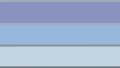
An alternate gendervague flag, by tumblr user possum-butch.

Another alternate gendervague flag.


Pendogender[edit | edit source]


- Name(s): pendogender
- Origin: Coined in 2014 by Tumblr user pastel-memer by submission to the MOGAI-Archive blog.[41]
- Meaning: As originally described by pastel-memer, it means "never being satisfied with your gender or feeling settled no matter how well it fits due to self-doubt, causing one to compulsively search and seek out something that fits even better. Gender perfectionism. The 'gender' part can be replaced by the closest fitting gender at any time, i.e. pendojuxera or pendo-agender. For neurodivergent folks only, coined with people with anxiety disorders, OCD, and OCPD in mind."[41]
- Keywords: anxiety, gender connected with mind or brain conditions (neurogender), genders about things other than connection to female or male, Obsessive Compulsive Disorder (OCD), Obsessive-Compulsive Personality Disorder (OCPD), prefix, questioning
- Demographics: In the 2019 Gender Census, one respondent.[23]
See also[edit | edit source]
References[edit | edit source]
- ↑ Baaphomett. "Masterpost of genders coined by Baaphomett." Mogai-Archive. Original post where these were coined, which is lost: http://mogai-archive.tumblr.com/post/91736136744/masterpost-of-genders-coined-by-baaphomett Archive of that post: https://purrloinsucks.tumblr.com/post/95720973644/masterpost-of-genders-coined-by-baaphomett Archive of that archive: https://archive.is/yULU0#selection-169.2-169.93
- ↑ "What Is: Neurodiversity, Neurodivergent, Neurotypical." Disabled World. Updated April 7, 2020. https://www.disabled-world.com/disability/awareness/neurodiversity/ [unknown-error Archived] on 17 July 2023
- ↑ Ehrensaft, Diane (2016). The Gender Creative Child. p. 106.
- ↑ American Psychiatric Association. (2022). Diagnostic and statistical manual of mental disorders (5th ed., text rev.). https://doi.org/10.1176/appi.books.9780890425787
- ↑ 5.0 5.1 5.2 5.3 5.4 American Psychiatric Association, ed. (2013). "Autism Spectrum Disorder, 299.00 (F84.0)". Diagnostic and Statistical Manual of Mental Disorders, Fifth Edition. American Psychiatric Publishing. Unknown parameter
|pagex=ignored (help) - ↑ Filipek PA, Accardo PJ, Baranek GT, Cook EH, Dawson G, Gordon B, Gravel JS, Johnson CP, Kallen RJ, Levy SE, Minshew NJ, Ozonoff S, Prizant BM, Rapin I, Rogers SJ, Stone WL, Teplin S, Tuchman RF, Volkmar FR (1999). "The screening and diagnosis of autistic spectrum disorders". J Autism Dev Disord. 29 (6): 439–484. doi:10.1023/A:1021943802493. PMID 10638459. S2CID 145113684. This paper represents a consensus of representatives from nine professional and four parent organizations in the US.
- ↑ Geschwind, Daniel H (2009). "Advances in autism". Annu Rev Med. 60: 367–380. doi:10.1146/annurev.med.60.053107.121225. PMC 3645857. PMID 19630577.
- ↑ Pinel JP (2011). Biopsychology (8th ed.). Boston, Massachusetts: Pearson. p. 235. ISBN 978-0-205-03099-6. OCLC 1085798897.
- ↑ Rogers SJ (2009). "What are infant siblings teaching us about autism in infancy?". Autism Res. 2 (3): 125–137. doi:10.1002/aur.81. PMC 2791538. PMID 19582867.
- ↑ Steinhausen HC, Mohr Jensen C, Lauritsen MB (June 2016). "A systematic review and meta-analysis of the long-term overall outcome of autism spectrum disorders in adolescence and adulthood". Acta Psychiatrica Scandinavica. 133 (6): 445–452. doi:10.1111/acps.12559. PMID 26763353.
- ↑ Rapin I, Tuchman RF (October 2008). "Autism: definition, neurobiology, screening, diagnosis". Pediatric Clinics of North America. 55 (5): 1129–1146, viii. doi:10.1016/j.pcl.2008.07.005. PMID 18929056.
- ↑ Happé F, Ronald A (2008). "The 'fractionable autism triad': a review of evidence from behavioural, genetic, cognitive and neural research". Neuropsychol Rev. 18 (4): 287–304. doi:10.1007/s11065-008-9076-8. PMID 18956240. S2CID 13928876.
- ↑ Happé F, Ronald A, Plomin R (2006). "Time to give up on a single explanation for autism". Nature Neuroscience. 9 (10): 1218–1220. doi:10.1038/nn1770. PMID 17001340.
- ↑ Myers SM, Johnson CP (November 2007). "Management of children with autism spectrum disorders". Pediatrics. 120 (5): 1162–1182. doi:10.1542/peds.2007-2362. PMID 17967921.
- ↑ Silverman C (2008). "Fieldwork on another planet: social science perspectives on the autism spectrum". BioSocieties. 3 (3): 325–341. doi:10.1017/S1745855208006236. S2CID 145379758.
- ↑ Frith, Uta (October 2014). "Autism – are we any closer to explaining the enigma?". The Psychologist (magazine). 27. British Psychological Society. pp. 744–745. Archived from the original on 17 July 2023. Unknown parameter
|name-list-format=ignored (help) - ↑ Newschaffer CJ, Croen LA, Daniels J, Giarelli E, Grether JK, Levy SE, Mandell DS, Miller LA, Pinto-Martin J, Reaven J, Reynolds AM, Rice CE, Schendel D, Windham GC (2007). "The epidemiology of autism spectrum disorders". Annual Review of Public Health. 28: 235–258. doi:10.1146/annurev.publhealth.28.021406.144007. PMID 17367287.
- ↑ Maenner, M.J., Warren, Z., Williams, A.R., et al. (2023). Prevalence and Characteristics of Autism Spectrum Disorder Among Children Aged 8 Years — Autism and Developmental Disabilities Monitoring Network, 11 Sites, United States, 2020. MMWR Surveill Summ; 72(No. SS-2):1–14. DOI: http://dx.doi.org/10.15585/mmwr.ss7202a1
- ↑ Dietz, P. M., Rose, C. E., McArthur, D., & Maenner, M. (2020). National and State Estimates of Adults with Autism Spectrum Disorder. Journal of autism and developmental disorders, 50(12), 4258–4266. DOI: https://doi.org/10.1007/s10803-020-04494-4
- ↑ http://pride-flags-for-us.tumblr.com/post/123783742554/fascigender-and-autigender-flags-from-the-pride Archived on 17 July 2023
- ↑ 21.0 21.1 21.2 The since-deleted post in the mogai-archive blog where this word was coined: http://mogai-archive.tumblr.com/post/93477063574/auti-s-gender Another blog's archive of that lost blog post: http://purrloinsucks.tumblr.com/post/95723823254/autisgender An archive of that archive: https://archive.is/BTFMN#selection-489.0-489.14
- ↑ 22.0 22.1 "Gender Census 2016: Worldwide Report". Gender Census. March 19, 2016.
- ↑ 23.0 23.1 23.2 23.3 "Gender Census 2019: Worldwide Report". Gender Census. March 31, 2019.
- ↑ GC2020 Public Copy, 1 November 2020 Archived on 17 July 2023
- ↑ Borderline personality disorder NICE Clinical Guidelines, No. 78. British Psychological Society. 2009. Archived from the original on 17 July 2023.
- ↑ 26.0 26.1 26.2 26.3 26.4 26.5 "Borderline Personality Disorder". NIMH. Archived from the original on 22 March 2016. Retrieved 16 March 2016.
- ↑ 27.0 27.1 Manning, Shari (2011). Loving Someone with Borderline Personality Disorder. The Guilford Press. ISBN 978-1-59385-607-6. Unknown parameter
|name-list-format=ignored (help)CS1 maint: ref=harv (link) Page 23. - ↑ Manning, Shari (2011). Loving Someone with Borderline Personality Disorder. The Guilford Press. ISBN 978-1-59385-607-6. Unknown parameter
|name-list-format=ignored (help)CS1 maint: ref=harv (link) Page 24. - ↑ 29.0 29.1 29.2 "Bordergender/Borderfluid". borderline blog. 17 January 2015. Archived from the original on 21 September 2016.
- ↑ 30.0 30.1 "Gender Census 2020: Worldwide Report". Gender Census. November 2, 2020.
- ↑ "Schizophrenia". Mayo Clinic. 7 January 2020. Archived from the original on 17 July 2023. Retrieved 12 November 2020.
- ↑ "Decided to make a flag for Skhizeingender since it didn't have one!". 29 March 2020. Archived from the original on 17 July 2023.
- ↑ "skhizeingender". 28 November 2014. Archived from the original on 11 April 2019.[Dead link]
- ↑ "Anonymous asks: Are there any psychosis/schizophrenia specific genders/sexualities etc". 12 March 2019. Archived from the original on 17 July 2023.
- ↑ 35.0 35.1 35.2 35.3 Cryptomegha (Gcdzilla, StrangeGloved) (August 2014). "ok so the rly cool people at the neurodivergentkin network and myself are introducing a nonbinary gender that can only be used by neurodivergent people !". gcdzilla.tumblr.com. Archived from the original on 3 October 2014.
- ↑ Brown, Lydia X. Z. (22 June 2016). "Gendervague: At the Intersection of Autistic and Trans Experiences". The Asperger / Autism Network (AANE). Archived from the original on 17 July 2023. Retrieved 9 June 2020.
- ↑ Sparrow, Max (June 17, 2017). "What is gendervague?". Transtistic: At the Intersection of Transtistic and Autgender (blog). Archived from the original on April 11, 2019. Retrieved April 11, 2019.
- ↑ Sparrow, Max. "About". Transtistic. Archived from the original on 17 July 2023. Retrieved 5 October 2020.
Max Sparrow, Neuroqueer author and gendervague epicene
- ↑ http://pride-flags-for-us.tumblr.com/post/123466666709/is-there-a-pendogender-flag [Dead link] Archived on 17 July 2023
- ↑ https://pride-color-schemes.tumblr.com/post/148289378876/pendogender Archived on 17 July 2023
- ↑ 41.0 41.1 "Pendogender". 1 February 2015. Archived from the original on 12 November 2020.