
Butch

Butch is an LGBTQ+ masculine gender expression or gender identity. While many people who identify as butch use the term in reference to their gender expression, others claim it as a nonbinary identity in itself, notably Leslie Feinberg, who defined butch as a gender neither male nor female. Butch is an identity that emerged in lesbian and bisexual culture in the 1940s, before there was a stark distinction in the community between types of women who were attracted to other women. Many lesbians have complicated relationships with gender, and may identify as simply butch. Butch is an identity that can be held by people of various queer sexual orientations and can belong to both cisgender and trans individuals.[1]
Traditionally, the identity and term butch has been used by individuals who are attracted to femmes. For some butches, this attraction to femmes represents a strong part of their own identity. Because of this, you will often see the dyadic term "butch/femme," or referrals to a butch/femme dynamic. However, some butches are attracted to other butches (this was already a topic in Leslie Feinberg's seminal novel Stone Butch Blues). The phenomenon of butches attracted to other butches is commonly called "masc-for-masc".[1]
Depending on the community in question, butch people may call themselves by different terms. In Black and Latine communities, there may be a preference for the words aggressive (ag for short) or stud, with much the same meaning as butch.[2][3] White people should use "butch" or another term rather than "stud".[1][4][5]
International Butch Appreciation Day is celebrated on August 18 annually.[6][7]
In a 2015 survey of non-cis people in the USA, 5% of respondents (about 1,385 people) were butch.[8]
Etymology[edit | edit source]
The origin of the word "butch" is uncertain. The word butch, meaning "masculine", may have been coined by abbreviating the word butcher, as first noted in George Cassidy's nickname, Butch Cassidy.[9]
"Butch" can be used as an adjective or a noun[10] to describe an individual's gender or gender performance. A masculine person of any gender can be described as butch, even though it is more common to use the term towards females with more masculine traits.[11] The term butch tends to denote a degree of masculinity displayed by a female individual beyond what would be considered typical of a tomboy. It is not uncommon for women with a butch appearance to face harassment or violence.[12] A 1990s survey of butches showed that 50% were primarily attracted to femmes, while 25% reported being usually attracted to other butches.[13]
BUTCH Voices, a national conference for "individuals who are masculine of center", including gender variant, went defunct in 2023.[14][15]
Attributes[edit | edit source]
There is debate about to whom the terms butch and femme can apply, and particularly whether transgender individuals can be identified in this way. For example, queer theorist Jack Halberstam argues that transgender men cannot be considered butch, since it constitutes a conflation of maleness with butchness. He further argues that butch–femme is uniquely geared to work in lesbian relationships.[16] Stereotypes and definitions of butch and femme vary greatly, even within tight-knit LGBT communities. On the other hand, the writer Jewelle Gomez muses that butch and femme women in the earlier twentieth century may have been expressing their closeted transgender identity.[17][18] Antipathy toward female butches and male femmes has been interpreted by some commentators as transphobia,[19] although female butches and male femmes are not always transgender, and indeed some heterosexuals of both genders display these attributes.[20][21]
Scholars such as Judith Butler and Anne Fausto-Sterling suggest that butch and femme are not attempts to take up "traditional" gender roles. Instead, they argue that gender is socially and historically constructed, rather than essential, "natural", or biological. The historian Joan Nestle argues that femme and butch may be seen as distinct genders in and of themselves.[22]
Difference between butch and male[edit | edit source]
Although butch is a masculine identity, it isn't the same thing as conventional manhood or masculinity. There are differences, particularly in how conventional manhood and masculinity involve conformity, whereas the MOGII qualities of butch make it subversive.
Butch gender expression through clothing doesn't follow the rules for how to dress conventionally as male or masculine, and in some ways is intentionally different. Butch clothing doesn't look the same as conventional men's wear. See the main article about these clothing differences.
Masculinity is different than maleness. Butches are different than transgender men. Although transgender men were assigned female at birth (or sometimes intersex), and some identified as lesbian before recognizing that they were trans men, the difference is that butch lesbians generally identify as women, and feel attracted to women, whereas trans men identify as men, and may or may not feel attracted to women.
Some have argued that butch people can benefit from male privilege or have toxic masculinity despite not being men.[1][23] However, this is disputed.[24][25][26]
Transgender butches[edit | edit source]
While the term "transgender butch" could apply to any masculine trans person, regardless of gender assigned at birth, the term is often used in a more specific sense to describe a person who was assigned female at birth and has a masculine gender expression. Transgender butches may identify as genderqueer or nonbinary; some claim butch as a specific nonbinary identity. Transgender butches may also identify as lesbians or dykes independently of their gender identity. A similar term is "stone butch", which describes a butch who prefers to avoid genital stimulation in sexual settings, sometimes due to gender dysphoria.
Other terms[edit | edit source]
Some women in lesbian communities eschew butch or femme classifications, believing that they are inadequate to describe an individual, or that labels are limiting in and of themselves. Other people within the LGBT community have tailored the common labels to be more descriptive, such as "soft stud," "hard butch," "gym queen," or "tomboy femme." Comedian Elvira Kurt contributed the term "fellagirly" as a description for LGBT women who are not strictly either femme or butch, but a combination. From the 1940s to 1990s, the term "kiki" was used for a similar meaning.[27][28]
Those who identify as butch and femme today often use the words to define their presentation and gender identity rather than strictly the role they play in a relationship, and that not all butches are attracted exclusively to femmes and not all femmes are exclusively attracted to butches, a departure from the historic norm. Besides the terms "butch" and "femme", there are a number of other terms used to describe the dress codes, the sexual behaviours, and/or the gender identities of the sexual subcultures who use them. The meanings of these terms vary and can evolve over time.
A butch woman may be described as a "stone butch", "diesel dyke"[29] "bulldyke", "bull bitch" or "bulldagger"[30] or simply just as a "dyke". The term "boi" is typically used by younger LGBT women. Defining the difference between a butch and a boi, one boi told a reporter: "that sense of play - that's a big difference from being a butch. To me, butch is like an adult...You're the man of the house."[31] There is also an emerging usage of the terms soft butch "stem" (stud-femme), "futch" (feminine butch)[32] or "chapstick lesbian" as terms for women who have characteristics of both butch and femme. Lesbians who are neither butch nor femme may be called "androgynous" or "andros".[29]
Another common term is "stud". A stud is a dominant lesbian, usually butch. They tend to be influenced by urban and hip-hop cultures and are often Hispanic or Black. In the New York City lesbian community, a butch may identify herself as AG (aggressive) or as a stud. In 2005, filmmaker Eric Daniel Peddle chronicled the lives of AGs in his documentary The Aggressives, following six women who went to lengths like binding their breasts to pass as men. But Peddle says that today, very young lesbians of color in New York are creating a new, insular scene that's largely cut off from the rest of the gay and lesbian community. "A lot of it has to do with this kind of pressure to articulate and express your masculinity within the confines of the hip-hop paradigm..."[33] The AG culture has also been represented on film by Black lesbian filmmaker Dee Rees' 2011 work, Pariah.[34]
Stone butch[edit | edit source]
Going back to at least the 1960s or 50s, a "stone butch" refers a masculine lesbian, and in contemporary use is associated with impenetrability.[35] The "stone" sexual role describes a preference for bringing pleasure to one's partner, without being touched oneself.[36][37] Being "stone" in this way can be connected with sexual trauma, gender dysphoria, or the asexual spectrum.
In relation to gender, a femme lesbian named Rachel Tessler wrote in 1996 that "some stone butches are almost beyond butch. They're almost in a kind of territory between genders, beyond being women. I think some stone butches aren't really women, in the way that they think about people."[38]
A 2001 dictionary of sex and gender terminology by linguist Philip Herbst noted that
| « | Bigendered or transgendered lesbians—individuals with [ AFAB] bodies who identify as masculine and may be attracted to other women— may call themselves stone butch [...] Stone may mean "very" in slang, but it also implies "untouchable" in a sexual sense—not wanting to be touched during sexual relations.[39] | » |
Soft butch[edit | edit source]
A soft butch, or stem (stud-fem), is a lesbian who exhibits some stereotypical butch traits without fitting the masculine stereotype associated with butch lesbians. Soft butch is on the spectrum of butch, as are stone butch and masculine, whereas on the contrary, ultra fem, high femme, and lipstick lesbian are some labels on the spectrum of lesbians with a more prominent expression of femininity, also known as femmes.[40] Soft butches may have gender identities of women, but primarily display masculine characteristics; soft butches predominantly express masculinity with a touch of femininity.[41]
The "hardness", or label depicting one's level of masculine expression as a butch is dependent upon the fluidity of their gender expression.[42] Soft butches might want to express themselves through their clothing and hairstyle in a more masculine way, but their behavior in a more traditionally feminine way.[41] For example, these traits of a soft butch may or may not include short hair, clothing that was designed for men, and masculine mannerisms and behaviors. Soft butches generally appear androgynous, rather than adhering to strictly feminine or masculine norms and gender identities.[43] Soft butches generally physically, sexually, and romantically express themselves in more masculine than feminine ways in the majority of those categories.[44]
In addition to a soft butch's gender expression through their outward appearance, they also have a distinctive way of sexually expressing themself. Soft butches might want to have a more passive role sexually or romantically in their relationships, which is generally associated with feminine sexual behavior.[41] This is an example of how a soft butch's sexuality and outward appearance are not completely masculine, but have some feminine traits. Conversely, stone butches are less fluid in their sexuality and do not want to receive sexual contact from their sexual partners.[42] This desire to express both masculinity and femininity through one's gender and sexuality is clearly seen in soft butch women, but also across many people of a variety of sexual orientations.[41]
Flags[edit | edit source]
There is no universally-accepted flag for the butch identity, but many have been proposed. Below are some of them.
- Error creating thumbnail: File with dimensions greater than 12.5 MP
By tumblr user dorian--rutherford.

By tumblr user butchspace.

By tumblr user catboyharuspex.
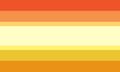
By tumblr user gendertreyf.

By tumblr user nbgender.

By twitter user FOLIELOADED.

By tumblr user xeno-aligned.

By tumblr user disasterbisexual.

By tumblr user butch-pentious.
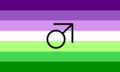
A flag for nonbinary butches (enbutches) submitted to Beyond MOGAI Pride Flags by user "ap".

By tumblr user sweetjinxii.

By tumblr user kenochoric, who nicknamed it the "sky butch" flag.
![The lesbian labrys flag, sometimes called the butch lesbian flag[45][46], but sometimes called the lesbian feminist flag.[47] Created in 1999 by gay graphic designer Sean Campbell.[48]](/wiki/File:Lesbian-labrys.png)


Notable butch people[edit | edit source]


There are many more notable people who have a gender identity outside of the binary. The following are only some of those notable people who specifically use the word "butch" (or a close analog to it) for themselves as a gender identity outside of the binary.
- The author Corey Alexander, who wrote under the pen name Xan West, identified as genderqueer, queer, trans, stone butch, demiromantic, and demigraysexual.[49]
- Ivan E. Coyote (b. 1969) is a Canadian author who has written extensively about being transgender and being butch. They[50] have made significant contributions to the representation of queerness in literature. They have won the ReLit Award for Best Fiction (2007), and the Stonewall Honor Book Award (2017). They describe themself as "a trans person who doesn't fit neatly into the gender binary,"[51] and they identify as butch.[52]
- American comedian, writer, and nurse Kelli Dunham describes herself[53] as a genderqueer woman[54]/nonbinary transmasc butch.[55]
- Leslie Feinberg (1949 - 2014) was a revolutionary communist and activist for transgender rights. Feinberg identified as a butch lesbian, in the sense of a queer masculine transgender identity neither female nor male. Feinberg's novel, Stone Butch Blues (1993) won the prestigious American Library Association Award for Gay and Lesbian Literature and a LAMBDA Literary Award (Leslie Feinberg).[56]
- American musician and comedian Maxine Feldman (1945 - 2007) identified as a transgender butch lesbian, went by a variety of pronouns, was described as having a "both/and" gender identity, and was comfortable with being labeled as a man or woman.[57][58]
- Sonalee Rashatwar is an American[59] Licensed Clinical Social Worker who has given talks internationally about sexuality, fat positivity, disability justice, racism, and more.[60] They identify as a soft butch enby.[61]
- Sinclair Sexsmith is a writer and performer. They identify as a "White non-binary butch feminist dominant".[62] Their short story collection, Sweet & Rough: Queer Kink Erotica, was a 2016 finalist for the Lambda Literary Award.
- Sarah Shook (b. 1985) is a nonbinary/genderqueer country musician who identifies as butch.[63]
Butch characters in fiction[edit | edit source]
See main article: Nonbinary gender in fiction
.jpg)
There are many more nonbinary characters in fiction who have a gender identity outside of the binary. The following are only some of those characters who are specifically called by the word "butch" (or a close analog to it) as a gender identity, either in their canon, or by their creators.
- Stone Butch Blues by Leslie Feinberg, a semi-autobiographical historical fiction novel about a butch named Jess Goldberg. The story focuses on the trials and tribulations she faces growing up in the United States before the Stonewall riots. Feinberg defines butch as a gender identity neither female nor male.
- Orange is the New Black included a main character, Carrie Black, who is a butch lesbian. The word "butch" is tattooed on her arm. Carrie is a cisgender butch.
- An Unkindness of Ghosts, by Rivers Solomon. The author has said, "Aster is an intersex butch lesbian, but maybe agender. Theo is a nonbinary trans woman. These are my interpretations, but arguments could certainly be made for other classifiers."[64]
- In the book Whirlwind, by Reese Morrison, Charlie is a gender questioning butch who uses she/her pronouns.[65]
- In the romance/suspense novel A Jade's Diamond, by Char Dafoe, the two main characters are a soft butch prostitute named Nayvee LaCroix and a stone butch millionaire named Trystan Diamond. Both characters are nonbinary.[66]
- Butch Bait: An Anthology Of Butch4Butch Desire, a 2026 collection of poetry and erotica, features multiple transmasculine and nonbinary butches.
See also[edit | edit source]
External Links[edit | edit source]
- Butchtastic: Butch, Genderqueer, Genderfluid, Genderfuck and Trans Blogs to watch out for
- Debonair Geek's Blog: Deep Thoughts
- Stone Butch Blues by Leslie Feinberg
- Susan's Place Transgender Resource Wiki: Butch and Femme
- Susan's Place Transgender Resource Wiki: Soft Butch
- Susan's Place Transgender Resources Wiki: Stone Butch
- Butch Voices, "a grassroots organization dedicated to all self-identified Masculine of Center people and our Allies"
- Urquhart, Evan (24 April 2015). "A Dispatch From the Shifting, Porous Border Between Butch and Trans". Slate Magazine. Archived from the original on 17 July 2023.
- What Is Stone? by Xan West
- Is Butch/Femme a Transgender Thang? by Lisa Lees
- Butch Is Not A Dirty Word, "A Queer Magazine for Butch Dykes, Butch Lesbians, Butch Women, Trans Butches, Non-binary Butches & All Those Who Love Them"
References[edit | edit source]
- ↑ 1.0 1.1 1.2 1.3 Bashan, Frankie (2020). "What Does It Mean To Be Butch?". Little Gay Book. Archived from the original on 17 July 2023. Retrieved 29 September 2020.
- ↑ "LGBTQ Terms and Definitions". Archived from the original on 17 July 2023. Retrieved 31 August 2022.
AGGRESSIVE (AG) An identity label claimed by some African-American and Latin@ masculine of center lesbians. Some use “stud” as a synonym.
- ↑ Green, Eli R.; Peterson, Eric N. (2006). "LGBTTSQI Terminology" (PDF). Trans-Academics.org. Archived from the original (PDF) on 17 July 2023.
- ↑ "HER - Stud Lesbian Meaning". Her. 29 February 2020. Archived from the original on 17 July 2023. Retrieved 11 November 2020.
- ↑ Prager, Sarah (10 March 2020). "Dear White Lesbians: You Are Not Studs". Tagg Magazine. Archived from the original on 17 July 2023. Retrieved 13 December 2020.
- ↑ "Happy Butch Appreciation Day – here's to all the butches!". Stonewall. 16 August 2019. Archived from the original on 17 July 2023. Retrieved 22 June 2020.
- ↑ "Lesbian Culture & Visibility". QueerEvents.ca. Archived from the original on 17 July 2023. Retrieved 22 June 2020.
- ↑ "2015 U.S. Transgender Survey Complete Report" (PDF). p. 44. Archived from the original (PDF) on 17 July 2023. Retrieved 23 October 2020.
- ↑ Walker, Ja'nina (March 2012). "Butch Bottom–Femme Top? An Exploration of Lesbian Stereotypes". Journal of Lesbian Studies. 16 (1): 90–107. doi:10.1080/10894160.2011.557646. PMID 22239455.
- ↑ Bergman, S. Bear (2006). Butch is a noun. San Francisco: Suspect Thoughts Press. ISBN 978-0-9771582-5-6. Archived from the original on 2023-07-19. Retrieved 2019-11-24.CS1 maint: bot: original URL status unknown (link)
- ↑ Smith, Christine A.; Konik, Julie A.; Tuve, Melanie V. (2011). "In Search of Looks, Status, or Something Else? Partner Preferences Among Butch and Femme Lesbians and Heterosexual Men and Women". Sex Roles. 64 (9–10): 658–668. doi:10.1007/s11199-010-9861-8. ISSN 0360-0025. Archived from the original on 17 July 2023. Retrieved May 1, 2016. CS1 maint: discouraged parameter (link)
- ↑ "2014 National Street Harassment Report - Stop Street Harassment". stopstreetharassment.org. Archived from the original on 17 July 2023. Retrieved 31 March 2018. CS1 maint: discouraged parameter (link)
- ↑ Caramagno, Thomas C. (2002). Irreconcilable Differences? Intellectual Stalemate in the Gay Rights Debate. ABC-CLIO. p. 138. ISBN 978-0275977214. Archived from the original on 19 July 2023. Retrieved 24 November 2019.CS1 maint: bot: original URL status unknown (link)
- ↑ "About". BUTCH Voices. April 9, 2009. Archived from the original on December 19, 2018. Retrieved 11 September 2019. CS1 maint: discouraged parameter (link)
- ↑ "BUTCH Voices Conference Makes Masculine Of Center Womyn Heard". Curve. May 8, 2017. Archived from the original on 17 July 2023. Retrieved 11 September 2019. CS1 maint: discouraged parameter (link)
- ↑ Caramagno, Thomas C. (2002). Irreconcilable Differences? Intellectual Stalemate in the Gay Rights Debate. ABC-CLIO. pp. 137–8. ISBN 978-0275977214. Archived from the original on 19 July 2023. Retrieved 24 November 2019.CS1 maint: bot: original URL status unknown (link)
- ↑ Munt, Sally (1998). Butch/Femme: Inside Lesbian Gender. Continuum International Publishing Group. p. 229. ISBN 978-0304339594. Archived from the original on 19 July 2023. Retrieved 24 November 2019.CS1 maint: bot: original URL status unknown (link)
- ↑ Coyote, Ivan E.; Sharman, Zena, eds. (2011). "Femme Butch Feminist, by Jewelle Gomez". Persistence: All Ways Butch and Femme. Vancouver, B.C., Canada: Arsenal Pulp Press. pp. 67–78. ISBN 978-1551523972.
- ↑ Tyler, Carol-Ann (2003). Female Impersonation. Routledge. p. 91. ISBN 978-0-415-91688-2. Archived from the original on 19 July 2023. Retrieved 24 November 2019.CS1 maint: bot: original URL status unknown (link)
- ↑ O'Hara, Kate (7 January 2015). "There's No Other Georgy Deep Inside – Coming Out As A Butch Straight Woman". The Vagenda. Archived from the original on 31 July 2019.
- ↑ Hunt, James (14 May 2015). "Confessions Of A Feminine Straight Guy". thoughtcatalog.com. Archived from the original on 17 July 2023. Retrieved 20 September 2020. CS1 maint: discouraged parameter (link)
- ↑ Nestle, Joan (1992). The Persistent Desire: A Femme–Butch Reader. Alyson Publications. ISBN 978-1555831905. Archived from the original on 19 July 2023. Retrieved 24 November 2019.CS1 maint: bot: original URL status unknown (link)
- ↑ Nash, Tammye (3 March 2011). "COVER STORY: Butch Voices". Dallas Voice. Archived from the original on 17 July 2023. Retrieved 29 September 2020.
- ↑ Factora, James (10 October 2019). "Being Butch Does Not Mean I Experience Masculine Privilege". refinery29.com. Archived from the original on 17 July 2023. Retrieved 29 September 2020.
- ↑ Lee, Atticus. "The Role of Butch/Femme Relationships in Transgender Activism: A Codependent Mutualism" (PDF). Archived from the original (PDF) on 17 July 2023.
Butch lesbians debunk the gender binary with their mere existence; they embody masculine gender presentations without possessing male privilege or participating in the dominant patriarchy.
Cite journal requires|journal=(help) - ↑ Kaos, Trini (20 April 2020). "Lesbian Subcultures: Are you Looking for a Butch or Femme?". Queer Events. Archived from the original on 17 July 2023. Retrieved 19 April 2021.
No institution or culture privileges butches and they are often routinely punished; both in their gender-non-conformity and in their status as a visible marker of lesbianism.
- ↑ Zimmerman, Bonnie, ed. (2000). Encyclopedia of Lesbian and Gay Histories and Cultures. Vol. I. Garland Publishing, Inc. p. 140.
Kiki: a term used from the 1940s through the 1960s for a lesbian who could be either butch or femme.
- ↑ Ainley, Rosa (1995). What is She Like?: Lesbian Identities from the 1950s to the 1990s. p. 152.
Although kiki has never been a term, or a category, with such currency as butch and femme, and is still far more recognized in the USA than in Britain, it now means someone who is deliberately both, rather than the 'neither fish nor fowl' connotation it used to have.
- ↑ 29.0 29.1 "Common lesbian slang and terminology". The Other Team. Archived from the original on 7 February 2020.
- ↑ Haggerty, George E. (2000). Encyclopedia of Lesbian And Gay Histories and Cultures, Vol 1. Taylor & Francis. ISBN 978-0815333548. Archived from the original on 17 July 2023.
- ↑ Levy, Ariel. "Where the Bois Are". New York News and Features. Archived from the original on 17 July 2023. Retrieved November 29, 2016. CS1 maint: discouraged parameter (link)
- ↑ Belge, Kathy (2011). Queer: The Ultimate LGBT Guide for Teens. Houghton Mifflin Harcourt. p. 10. ISBN 9780547687322. Archived from the original on 17 July 2023.
- ↑ Hilliard, Chloe A. (3 April 2007). "Girls to Men". The Village Voice. Archived from the original on 22 October 2008.
- ↑ George, Nelson (December 23, 2011). "New Directors Flesh Out Black America, All Of It". New York Times. Archived from the original on 17 July 2023. Retrieved November 29, 2016. CS1 maint: discouraged parameter (link)
- ↑ Halberstam, Judith (1998). "Lesbian Masculinity: Even Stone Butches Get the Blues". Female Masculinity (1st ed.). Duke University Press. p. 111. ISBN 0822322269. Archived from the original on 17 July 2023.
- ↑ Zimmerman, Bonnie, ed. (1999). Lesbian Histories and Cultures (1st ed.). Routledge. p. 140. ISBN 978-0815319207. Archived from the original on 17 July 2023.
- ↑ Myers, JoAnne, ed. (2013). Historical Dictionary of the Lesbian and Gay Liberation Movements (1st ed.). Scarecrow Press. p. 346. ISBN 0810874687.
- ↑ Render Me, Gender Me: Lesbians Talk Sex, Class, Color, Nation, Studmuffins..., p. 104-105, Columbia University Press, 1996
- ↑ Herbst, Philip (2001). Wimmin, Wimps & Wallflowers: An Encyclopaedic Dictionary of Gender and Sexual Orientation Bias in the United States. p. 41.
- ↑ Smith, Christine A.; Stillman, Shannon (2003). "Do Butch and Femme Still Attract?". The Gay & Lesbian Review Worldwide. X (4).
- ↑ 41.0 41.1 41.2 41.3 Rose, Dawn; Plaskow, Judith (2009). "Yusuf Come Home: Parashat Miketz (genesis 41:1-44:17)". Torah Queeries: Weekly Commentaries on the Hebrew Bible: 62.
- ↑ 42.0 42.1 Halberstam, Judith (1998). Female Masculinity (5page=123 ed.). Duke University Press. ISBN 978-0-8223-2243-6. Archived from the original on 19 July 2023. Retrieved 24 November 2019. CS1 maint: discouraged parameter (link) CS1 maint: bot: original URL status unknown (link)
- ↑ Rosario, Margaret; Schrimshaw, Eric W.; Hunter, Joyce; Levy-Warren, Anna (2007-09-26). "The Coming-Out Process of Young Lesbian and Bisexual Women: Are There Butch/Femme Differences in Sexual Identity Development?". Archives of Sexual Behavior. 38 (1): 34–49. doi:10.1007/s10508-007-9221-0. ISSN 0004-0002. PMC 3189348. PMID 17896173.
- ↑ Carpenter, Karen; McKenzie, Matthew (2011). "Love on a Continuum". Social and Economic Studies. 60 (1): 118.
- ↑ @SpacemanBobs (2 July 2020). "It's not pride month anymore so I know this is a little late but I would like to remind everyone that the butch lesbian flag is a BATTLE AXE" – via Twitter.
- ↑ @chlonus_thonus (2 June 2020). "The butch flag is one of the coolest pride flags imo because it uses a symbol instead of just stripes. (I still like the regular lesbian flag, it's common for gay subcultures to also have their own flags)" – via Twitter.
- ↑ "Sexual identity symbols". Wikimedia Commons. 29 September 2020. Retrieved 14 December 2020.
- ↑ "Butch Lesbian (Labrys) Pride Flag Printed 90 x 150 cm". Gays&Gadgets.
- ↑ Simkiss, Ceillie. "Author Interview: Xan West". Let's Fox About It. Archived from the original on 17 July 2023. Retrieved 5 October 2020.
- ↑ Black, Eleanor (August 20, 2016). "Ivan Coyote: 'I always knew I was not the same as other little girls'". Stuff.co.nz. Retrieved July 26, 2017. https://www.stuff.co.nz/entertainment/books/83178100/ivan-coyote-i-always-knew-i-was-not-the-same-as-other-little-girls Archived on 17 July 2023
- ↑ Why we need gender-neutral bathrooms, Ivan Coyote, November 2015 Archived on 17 July 2023
- ↑ https://abcbookworld.com/writer/coyote-ivan-e/ Archived on 17 July 2023
- ↑ "THE STORY". kellidunham.com. Archived from the original on 17 July 2023. Retrieved 24 July 2020.
- ↑ Wood, Erin (15 May 2017). "Q&A: Comedian Kelli Dunham on Storytelling as a Radical, Transformative Act". Ms. Magazine. Archived from the original on 17 July 2023. Retrieved 3 June 2020.
- ↑ Guerrero, Desirée (21 April 2020). "Genderqueer Comic Kelli Dunham On Getting (Thee) Away From a Nunnery". The Advocate. Archived from the original on 17 July 2023. Retrieved 3 June 2020.
- ↑ Village Voice Archived on 17 July 2023
- ↑ "Maxine Feldman, 1945 - 2007". Jewish Women's Archive. Archived from the original on 17 July 2023. Retrieved 8 October 2020.
- ↑ Kiritsy, Laura (August 30, 2007). "Lesbian trail blazer Maxine Feldman dies". Edge Providence. Archived from the original on 17 July 2023.
- ↑ Owens, Cassie (3 July 2019). "To end fatphobia, we need to dismantle Western civilization, says Philly therapist Sonalee Rashatwar". The Inquirer. Archived from the original on 17 July 2023. Retrieved 16 June 2020.
- ↑ Fabello, Melissa A. (21 May 2019). "Sonalee Rashatwar Is Returning Body Positivity to Its Political Roots". Bitch Media. Archived from the original on 17 July 2023. Retrieved 16 June 2020.
- ↑ https://www.instagram.com/thefatsextherapist/ Archived on 17 July 2023
- ↑ "Sinclair Sexsmith profile". Medium. Archived from the original on 17 July 2023. Retrieved 9 April 2020.
- ↑ Cholst, Rachel. "Your Guide to the Butches of Queer Country". Country Queer. Archived from the original on 17 July 2023. Retrieved April 10, 2021.
- ↑ Falck, Alex (10 October 2018). "An Interview with Author Rivers Solomon". Archived from the original on 25 June 2019.
- ↑ Morrison, Reese (2020). Whirlwind (Kindle ed.).
- ↑ Amazon reviews for A Jade's Diamond Archived on 17 July 2023

